

By Melzware — 11 October 2026 · 8 min read
To cook with stainless steel pots and pans, preheat the empty pan on medium for 2 to 3 minutes, check it with a few drops of water, then add oil and wait 10 seconds before the food goes in. Leave the food alone until it releases by itself. Keep the dial at medium for most cooking, and let the pan cool before you wash it.
Shop Stainless Steel Pots at Melzware
Heat: the stainless steel pan heat setting that works
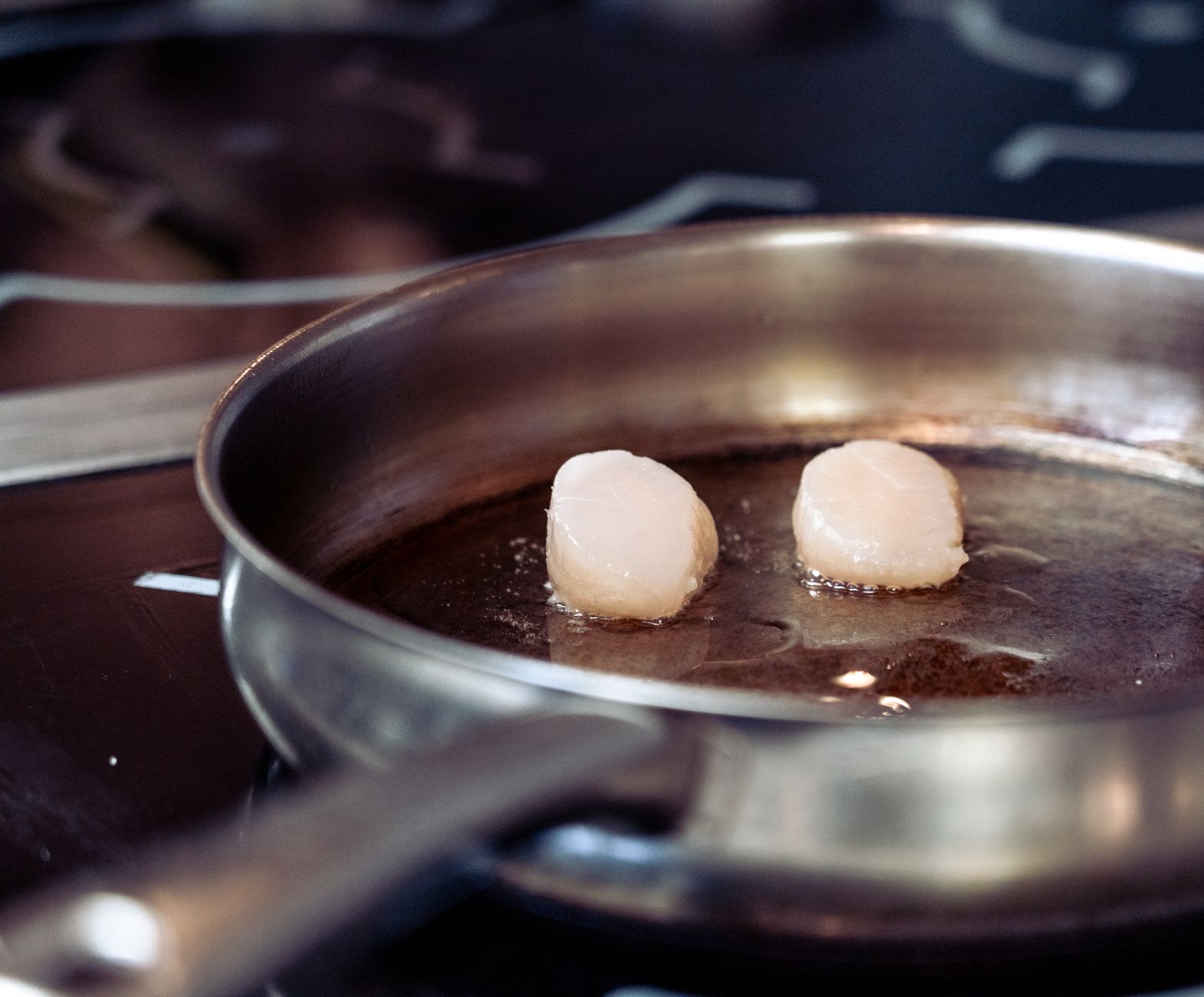
Most problems with stainless steel come from heat: too much of it, or not enough waiting for it.
Stainless steel has no coating. When it's cold, food grips tiny pores in the metal. When the pan is properly hot, a layer of steam forms under the food and lifts it away. That is why preheating matters more here than with non-stick.
The water-drop test
- Put the empty pan on medium heat for 2 to 3 minutes.
- Flick in a few drops of water.
- If they sizzle and disappear, wait another 30 seconds.
- If they form a ball and skate around the pan, it's ready.
Here's our view: this test is the only thermometer you need. The skating happens because of the Leidenfrost effect. It starts at around 193°C, when the drop sits on its own cushion of steam. That's the same steam layer that stops your chicken sticking. If the water skates, the food will release.
Gas, electric or induction
- Gas: keep the flame under the base. Flames up the sides heat the handles and waste energy.
- Induction: heats faster than you expect. Start a notch lower than you would on gas, and run the water test after about 1 minute.
- Electric and ceramic plates: they're slow to respond, so turn down a little before the food is done rather than after.
Once it's preheated, medium is enough for searing on a good multi-layer base. Use high heat only to bring water to the boil.
Oil and food: the two things that stop sticking
Oil goes in after the preheat, not before. Add about a tablespoon, swirl it, and wait 10 seconds until it shimmers. Sunflower or canola oil handles searing heat. Extra virgin olive oil is fine on medium-low but smokes sooner.
Butter burns faster than oil. Start with oil, then add butter near the end for flavour.
Get the food ready:
- Take meat out of the fridge 15 to 20 minutes before cooking. Ice-cold food cools the pan where it lands and sticks.
- Pat meat, fish and vegetables dry with paper towel. Water on the surface steams instead of browning.
- Don't crowd the pan. Leave a finger's width between pieces, and cook in batches if you have to.
Then leave it alone. Food sticks first and releases when a crust forms. If it won't lift with a gentle nudge, it isn't ready.
Which pot in a stainless steel pot set does which job

Most stainless steel cookware sets, pots and pans included, come with the same core pieces. Each one has a job it does best.
| Piece | Use it for | Heat |
|---|---|---|
| Stockpot | Pasta, stock, soup, mealie pap in bulk, blanching | High to boil, then medium-low |
| Large saucepan or casserole | Stews, curries, rice, steaming vegetables | Medium, then low with the lid on |
| Small saucepan | Sauces, custard, reheating, boiling eggs | Low to medium |
| Frying pan or skillet | Searing meat, browning onions, pan sauces | Preheat on medium |
The glass lids matter more than people think. With the lid on, a pot holds a simmer at a lower setting and uses less energy, whether you cook on electric or gas.
Our Stainless Steel Pots Set of 5 (R2499) is 3-ply, with an 18/8 steel cooking surface and an aluminium core, and works on gas, electric and induction. For a bigger household, the 11 piece stainless steel pots set (R2999) adds more sizes. For steel grades and what to look for in a set, read our stainless steel cookware set buying guide.
Searing and making a pan sauce

This is where stainless steel beats non-stick. The brown bits left in the pan after searing are called fond. Non-stick pans don't make much of it. Stainless steel does, and it's pure flavour.
- Sear the meat using the steps above. Move it to a plate.
- Pour off most of the fat, leaving about a teaspoon. Turn the heat to medium-low.
- Add a chopped onion or garlic and cook for a minute.
- Deglaze. Pour in about 125ml of stock, wine or even water. It will hiss. Scrape the brown bits off the bottom with a wooden spoon as it bubbles.
- Reduce by about half, until it coats the back of the spoon.
- Finish off the heat with a knob of butter or a splash of cream, then pour it over the meat.
A bonus: deglazing also does half the washing up for you.
Eggs, fish, starch and acidic food
- Eggs. The hardest food to cook in stainless. Use medium-low heat, more fat than you think (oil and butter together), and wait until the white sets before you move them.
- Skin-on fish. Dry the skin well, lay the fish skin-side down away from you, and press it flat for 10 seconds. Don't touch it until the skin releases, usually 3 to 4 minutes.
- Rice, pasta and pap. Starch sticks to the bottom of the pot. Stir in the first few minutes, use plenty of water for pasta, and keep rice and pap on a low simmer with the lid on.
- Tomato, wine and lemon. Stainless steel doesn't react with acid, so it's the right pot for bolognese or a tomato-based curry. Just move leftovers into a container instead of leaving them in the pot overnight.
Mistakes that damage stainless steel pots and pans
- Salting cold water. Undissolved salt sitting on the bottom can leave small pits in the steel. Add salt once the water is boiling.
- Cranking the heat. High heat on an empty pan leaves blue and rainbow marks and burns oil onto the surface. The marks are harmless and come off with a little white vinegar.
- Plunging a hot pan into cold water. The sudden temperature change can warp the base so it no longer sits flat, which matters a lot on induction. Let it cool for a few minutes first.
- Steel wool and bleach. They scratch the polish and can cause rust spots. Use a non-scratch sponge.
- Giving up after the first sticky egg. Everyone sticks food in stainless steel in the first week. It's the heat, not the pot.
For stuck-on food, fill the pot with water, simmer for 5 minutes and scrape with a wooden or silicone utensil. Full cleaning steps are in our stainless steel cookware set guide.
When to use non-stick instead

Stainless steel pots and pans aren't the right choice for every cook or every dish.
- You cook mostly eggs, pancakes and omelettes. A non-stick pan does these with less fat and less fuss.
- You want to cook with almost no oil. Stainless needs a layer of fat to release food.
- You don't want a learning curve. If you want to put a pan on any heat and have it just work, choose a coated pan.
Many kitchens do best with both: stainless for searing, boiling and sauces, and one non-stick pan for eggs. Our granite non-stick 8 piece pot set (R1399) covers the non-stick side. If you're still deciding between the two, read granite vs stainless steel pots.
Frequently Asked Questions
What heat setting should I use for stainless steel pots and pans?
Medium for almost everything. A good multi-layer base spreads heat well, so medium is hot enough to sear once the pan has preheated. Use high heat only to bring water to the boil, then turn it down.
Can I cook tomato sauce in stainless steel?
Yes. Stainless steel does not react with tomatoes, wine, vinegar or lemon the way bare aluminium or cast iron can, so it is one of the best materials for acidic sauces. Just do not store acidic food in the pot overnight; move leftovers into a storage container.
Can I use metal utensils on stainless steel pans?
Yes, stainless steel will not lose a coating the way non-stick does. Metal utensils can leave fine surface scratches over time, which affect looks rather than cooking. Wooden or silicone utensils keep the polished finish looking new for longer.
Why did my stainless steel pan turn blue or rainbow coloured?
That is heat tint, caused by heating the pan too hot, often while empty for too long. It is harmless and does not affect cooking. Wipe it with a little white vinegar to remove it, and preheat on medium rather than high next time.
Should I use oil or butter in a stainless steel pan?
Use oil for searing and frying, because butter burns at a lower temperature. Sunflower or canola oil handles medium-high heat well. Add butter near the end for flavour, or use a mix of oil and butter for eggs and fish on lower heat.
Related at Melzware
- Shop pots and pot sets
- Shop kitchen utensils
- Stainless steel cookware set: how to choose one that lasts
- Granite vs stainless steel pots: which should you buy?