

By Melzware — 27 September 2026 · 11 min read
A good stainless steel cookware set comes down to four checks. Look for 18/8 or 18/10 steel on the cooking surface, and an aluminium core in the base or walls for even heat. Check that the pot count suits how you cook, and that the base is magnetic if you have induction. Riveted handles and tempered glass lids are the parts that decide whether a set lasts five years or twenty-five.
Shop Stainless Steel Pots at Melzware
Why Stainless Steel Cookware Is Worth It

Stainless steel is what restaurant kitchens use, and the reasons carry straight over to a home kitchen.
- No coating to wear off. Non-stick pans lose their surface after a few years of use. A stainless steel pot has nothing to scratch through, so the surface you cook on in year ten is the same one you cooked on in year one.
- Non-reactive. Tomato sauce, wine and lemon will not strip the surface or pick up a metallic taste, which can happen with bare aluminium or unseasoned cast iron.
- Handles high heat. Sear on high or boil hard without worrying about fumes from a coating.
The trade-off is that stainless steel is not non-stick. Food will stick if you cook in it the way you cook in a non-stick pan. That is a technique problem, not a pan problem, and the fix takes about three minutes.
Steel Grade: 18/10, 18/8 and 18/0
The two numbers stamped on stainless steel cookware are the percentages of chromium and nickel in the steel. Chromium does most of the rust protection. Nickel adds shine and a bit more corrosion resistance.
| Grade | Chromium / nickel | Magnetic? | Where you find it |
|---|---|---|---|
| 18/10 | 18% / 10% | No | Cooking surface of higher-end sets |
| 18/8 | 18% / 8% | No | Cooking surface of most good sets |
| 18/0 | 18% / 0% | Yes | Outer base layer, so the pot works on induction |
Straight up: the gap between 18/8 and 18/10 is 2% nickel, and in a home kitchen you will struggle to notice it. Our own 5-piece stainless steel pots set uses an 18/8 interior, and we would still point you at the ply and the base before the grade. A thin 18/10 pot will scorch rice. A well-built 18/8 pot will not.
What to avoid is a listing that says "stainless steel" and gives no grade at all. That usually means a cheaper 200-series steel with less nickel, which is more prone to pitting and rust spots.
Clad or Disc Base: How the Layers Are Built
Stainless steel on its own is a poor conductor of heat. A pot made only of steel gets a hot spot over the flame and stays cool at the edges. Every decent stainless steel cookware set fixes this by adding a layer of aluminium (sometimes copper), which spreads heat quickly. There are two ways to do it.
Fully clad (tri-ply or 5-ply)
The aluminium runs right through the base and up the walls, sandwiched between steel. "Tri-ply" means three layers: steel, aluminium, steel. "5-ply" adds two more. Heat spreads evenly across the base and up the sides, which matters most for frying, searing and reducing sauces. Clad pans respond faster when you turn the heat down, too.
Encapsulated or disc base
The walls are single-layer steel, and a thick disc of aluminium is sealed into the base. The base heats evenly, but the sides stay cooler. For boiling, steaming, soups, stews and pap, that makes almost no difference. For browning onions right up to the edge of a frying pan, it does.
Neither type is wrong. A disc base is cheaper to make, and most of what a family cooks in a stainless steel pot is liquid-based. Our 7-piece pots set uses encapsulated bases for exactly that kind of everyday cooking. The 5-piece set is 3-ply with an aluminium core, which is the better pick if you fry and sear a lot.
Whichever you choose, check that the pot sits flat on a counter without rocking. A warped base loses contact with the hob, and on induction or a glass-top stove that means uneven heat.
What Is Actually in a Stainless Steel Pots and Pans Set
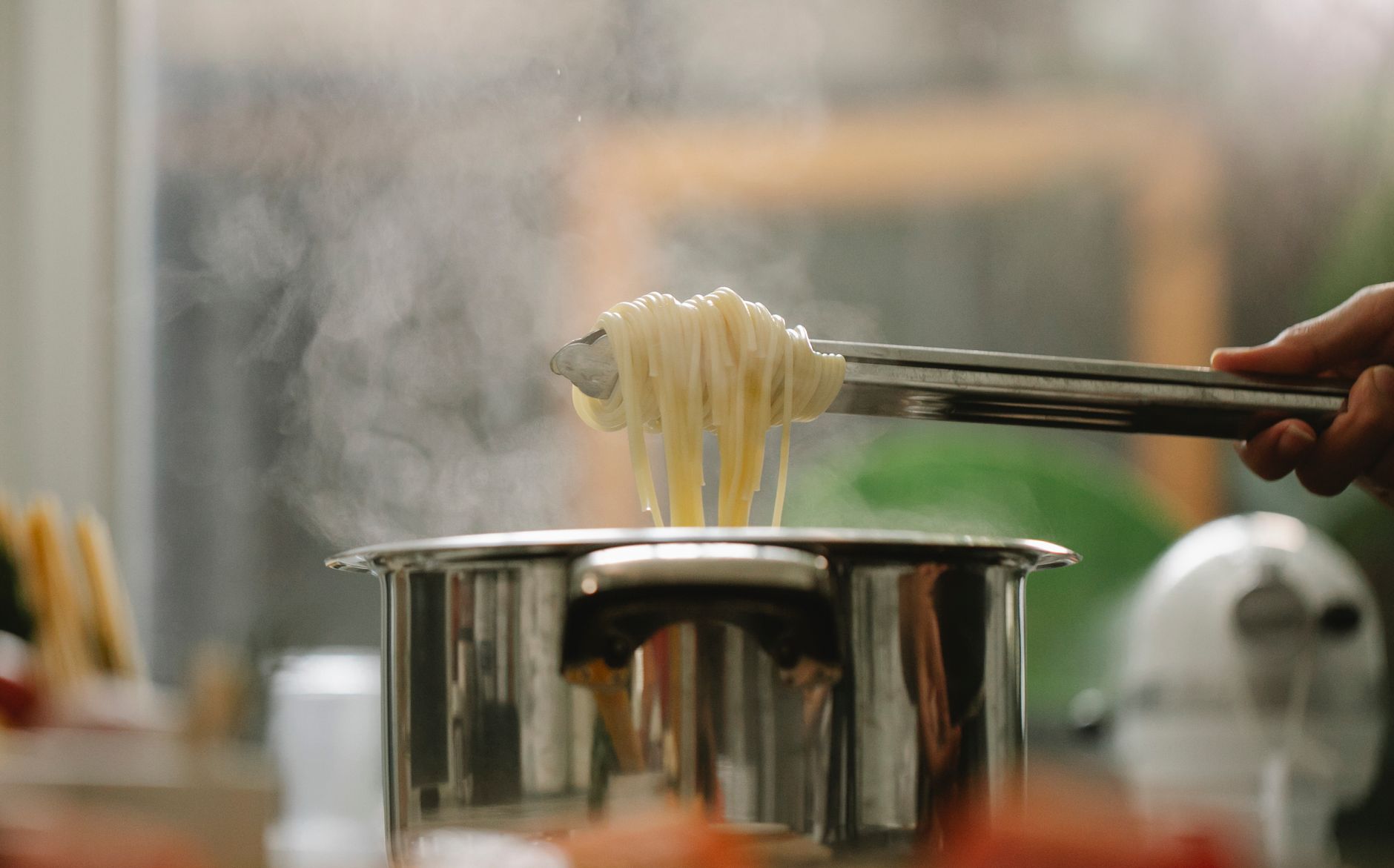
Here is the part most buyers miss. In most cookware sets, every lid counts as a piece. A "10-piece set" is often five pots and five lids. A "12-piece" might be five pots, five lids, a steamer insert and a spatula.
Our take: buy by pot count, not piece count. Before you compare two sets, divide the pieces into pots and lids, then compare the pots. A 10-piece set at a lower price can hold the same five vessels as a 7-piece set that happens to count its lids differently. The listing should list every item. If it only gives a number, ask.
The pots most kitchens use
- Small saucepan (1.5 to 2 litres). Custard, reheating soup, boiling eggs, melting butter. The pot you reach for most.
- Medium saucepan (2.5 to 3.5 litres). Rice, vegetables, sauces for four.
- Casserole or Dutch-style pot (4 to 6 litres). Stews, curries, mince, a pot of pap for the family.
- Stockpot (6 litres and up). Pasta, stock, soup for a crowd, mielies on the cob.
- Frying pan or skillet (24 to 28cm). Searing, eggs, stir-fries. This is what turns a pots set into a stainless steel pan set as well.
A household of one or two can cook almost everything with three of these: a small saucepan, a casserole and a frying pan. A family of four or more will use all five, often at once on a Sunday.
Gas, Electric or Induction: Check Your Stove First
Stainless steel cookware works on gas, solid-plate electric and ceramic glass tops. Induction is the one that catches people out.
An induction hob heats the pot through magnetism, so the base has to be magnetic. The 18/8 and 18/10 steel used for cooking surfaces is not. Induction-ready pots solve this with an outer layer of magnetic 18/0 steel, or a magnetic plate in the encapsulated base.
The magnet test
Take a fridge magnet to the bottom of the pot. If it grabs firmly, the pot will work on induction. If it barely holds or slides off, it will not, whatever the box says.
Heads up if you are switching stoves: many South African kitchens now run a gas hob next to a single-plate induction cooker, or plan to change one for the other. Buy a set that passes the magnet test even if you cook on gas today. It costs little extra, and the set moves with you. The 5-piece set above is induction compatible. On gas, keep the flame inside the base of the pot, because flames licking up the sides only heat the handles and discolour the steel.
Handles and Lids
Handles
Look for riveted handles. They do not work loose under the weight of a full stockpot, and an 8-litre pot of water weighs over 8kg. Spot-welded handles look cleaner inside the pot but can snap off after years of heavy use. Large pots should have two loop handles, not one long one.
Lids
Tempered glass lids let you watch rice and sauces without lifting the lid and losing steam. A small steam vent stops the lid rattling and boil-overs. Stainless steel lids are tougher and fully oven safe, but you have to lift them to check.
For most home cooking, glass lids with a steam vent are the more useful choice. Treat them gently. A tempered glass lid dropped onto a tiled floor can shatter.
How to Cook in a Stainless Steel Pan Set Without Sticking
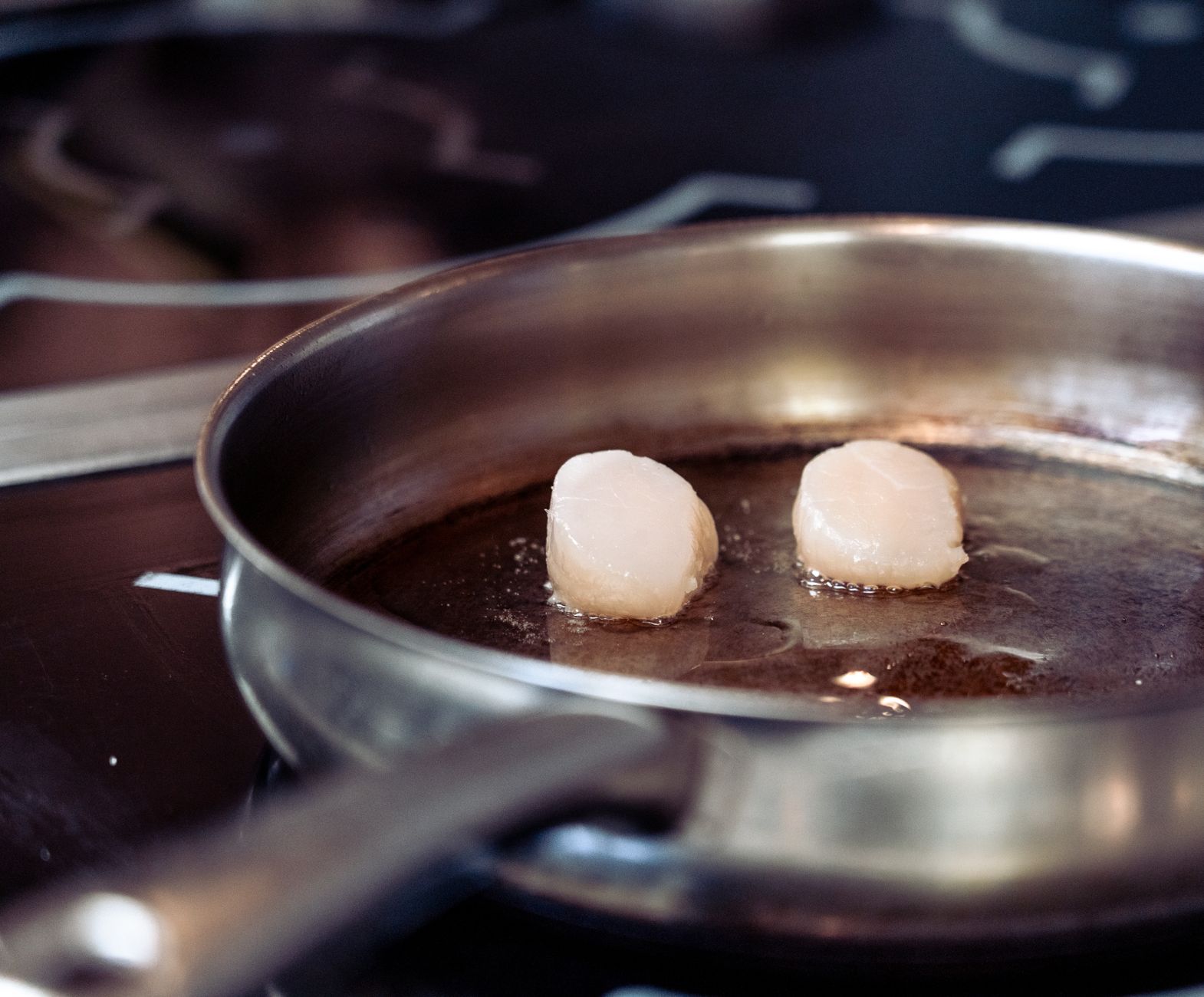
Food sticks to stainless steel when it goes into a pan that is not hot enough. Get the order right and it releases on its own.
- Heat the empty pan. Medium heat, two to three minutes. Not high. Stainless steel holds heat well and does not need to be blasted.
- Do the water test. Flick a few drops of water into the pan. If they sizzle and evaporate, wait. If they bead up into balls and skate across the surface, the pan is ready.
- Add oil, then the food. Swirl in the oil, give it ten seconds, then add the food. Pat meat and fish dry first. Wet or ice-cold food drops the pan temperature and sticks.
- Leave it alone. Protein sticks at first, then lets go once a crust forms. If it will not move, it is not ready. Wait another minute before turning it.
The one exception is eggs, which stick to stainless steel more than anything else. Use more butter than you think you need and lower heat. Or keep one non-stick pan for eggs and stop arguing with physics.
Two other habits help. Add salt to boiling water, not to cold water, because undissolved salt sitting on the base can cause small pits over time. And let a hot pan cool for a few minutes before it goes under the tap, so the base does not warp.
Cleaning and Care

Stainless steel cookware is hard to ruin, but a few habits keep it looking new.
Everyday washing
Hot water, dish soap and a non-scratch sponge. Most sets are dishwasher safe, but hand washing keeps a mirror finish brighter for longer. Dry the pots straight away to avoid water spots.
Stuck-on food
Fill the pot with a little water, bring it to a simmer for five minutes and scrape with a wooden spoon. Most burnt food lifts off. For what is left, make a paste of bicarbonate of soda and water, rub it in and rinse.
Rainbow marks and white spots
Rainbow or blue marks are heat tint, a harmless oxide layer from high heat. White chalky spots are calcium from hard water. White vinegar removes both.
What to avoid
- Steel wool and scouring powder with bleach. They scratch the finish and can dull it for good.
- Leaving salty or acidic food in the pot overnight. It can pit the surface.
- Stacking pots without a cloth or pan protector between them if you care about scratches.
Keep wooden or silicone kitchen utensils next to the stove. Stainless steel handles metal utensils better than non-stick, but wood and silicone keep the inside of the pot free of fine scratches.
Is Stainless Steel Cookware Safe?
Yes. There is no chemical coating, so there is nothing to flake into food or give off fumes at high heat.
Stainless steel does release tiny amounts of nickel and chromium into food, mainly during long cooking of acidic dishes such as tomato sauce. A 2013 study in the Journal of Agricultural and Food Chemistry found leaching was highest in new pots and fell over repeated cooking cycles. The authors flagged it mainly as a concern for people with a nickel allergy. If that is you, speak to your doctor and consider cooking acidic dishes in enamelled cast iron or glass.
Who Should Buy a Set, and Who Should Skip It
A stainless steel cookware set makes sense if
- You are replacing tired non-stick pots and want something that does not need replacing again.
- You cook most days, for a family, and use three or more pots at once.
- You are setting up a first home and want matching pots that work on any stove.
- You cook a lot of stews, soups, sauces and rice.
Buy single pieces instead if
- You live alone and cook simple meals. One saucepan and one frying pan will do.
- You already own pots you like and only need to replace one.
Skip stainless steel altogether if
- You mostly cook eggs, pancakes and delicate fish and have no interest in preheating. You will be happier with a good non-stick pan.
- You have weak wrists or arthritis in your hands. Clad stainless steel is heavy. A full casserole pot can be hard to lift and pour safely.
- You have a nickel allergy and cook a lot of tomato-based food, unless your doctor has said it is fine.
For everyone else, a stainless steel pots and pans set is the one kitchen purchase you are likely to make only once. Browse the full Melzware pots range, or read the Michelin Guide's purchasing advice for a chef's view on what to look for.
Frequently Asked Questions
Is 18/8 stainless steel cookware as good as 18/10?
For home cooking, the difference is small. Both have 18% chromium, which does most of the rust protection. 18/10 has 10% nickel instead of 8%, which adds a little extra shine and corrosion resistance. How the pot is built, meaning the ply and the base, matters far more to how it cooks than the 2% nickel gap.
Does stainless steel cookware work on induction?
Only if the base is magnetic. Many stainless steel pots use a magnetic outer layer or an encapsulated magnetic base so they work on induction, but not all do. Hold a fridge magnet to the bottom of the pot. If it sticks firmly, the pot will work on an induction hob.
Why does food stick to my stainless steel pan?
Usually because the pan was not hot enough when the food went in, or the food was moved too early. Preheat the empty pan on medium for two to three minutes, add oil, then add the food and leave it until it releases on its own. Cold, wet food straight from the fridge also sticks more, so pat meat dry first.
Do you need to season stainless steel pans?
No. Stainless steel does not need seasoning the way cast iron does. Some cooks build a light temporary layer by heating oil in the pan until it smokes, which helps with eggs, but it washes off. Proper preheating and enough fat do the same job every time.
Can stainless steel pots go in the dishwasher?
Most can, and the product listing will say so. Hand washing keeps the polished finish looking new for longer, because dishwasher detergent can dull the surface and leave spots over time. Dry the pots straight away to avoid water marks.
How long does a stainless steel cookware set last?
A well-made set can last decades. There is no coating to wear off, so the cooking surface does not degrade the way non-stick does. The parts most likely to fail are loose handles and cracked glass lids, which is why riveted handles and tempered glass are worth checking for.