

By Melzware — 29 September 2026 · 11 min read
The best meal prep containers have three things: a lid with a silicone seal and locking clips, a size that fits one meal without much empty space, and a material that suits how you reheat. Choose glass if you reheat in the container. Choose plastic if you carry your food to work or school. Whichever you pick, cooked food still only lasts 3 to 4 days in the fridge.
Shop Meal Prep Containers at Melzware
What to look for in meal prep containers

Most meal prep containers look alike in a product photo. The differences show up on day three, in a lunch bag, after a few runs through the microwave. Check these five things before you buy.
- The seal. A silicone gasket inside the lid, plus clips on all four sides. Without both, soups and sauces will leak.
- The material. Glass, plastic or stainless steel. Each handles heat, weight and staining differently.
- The sizes. A set with a range of capacities is more useful than ten identical boxes.
- Heat ratings. Microwave, freezer, oven and dishwasher safety should be stated clearly, for the container and the lid separately.
- Stacking. Containers that nest when empty and stack flat when full save a surprising amount of fridge and cupboard space.
Compartments are a sixth option, not a requirement. Divided containers keep a sauce off your rice, but they are harder to clean and less flexible. A small side container does the same job.
Glass vs plastic meal prep containers
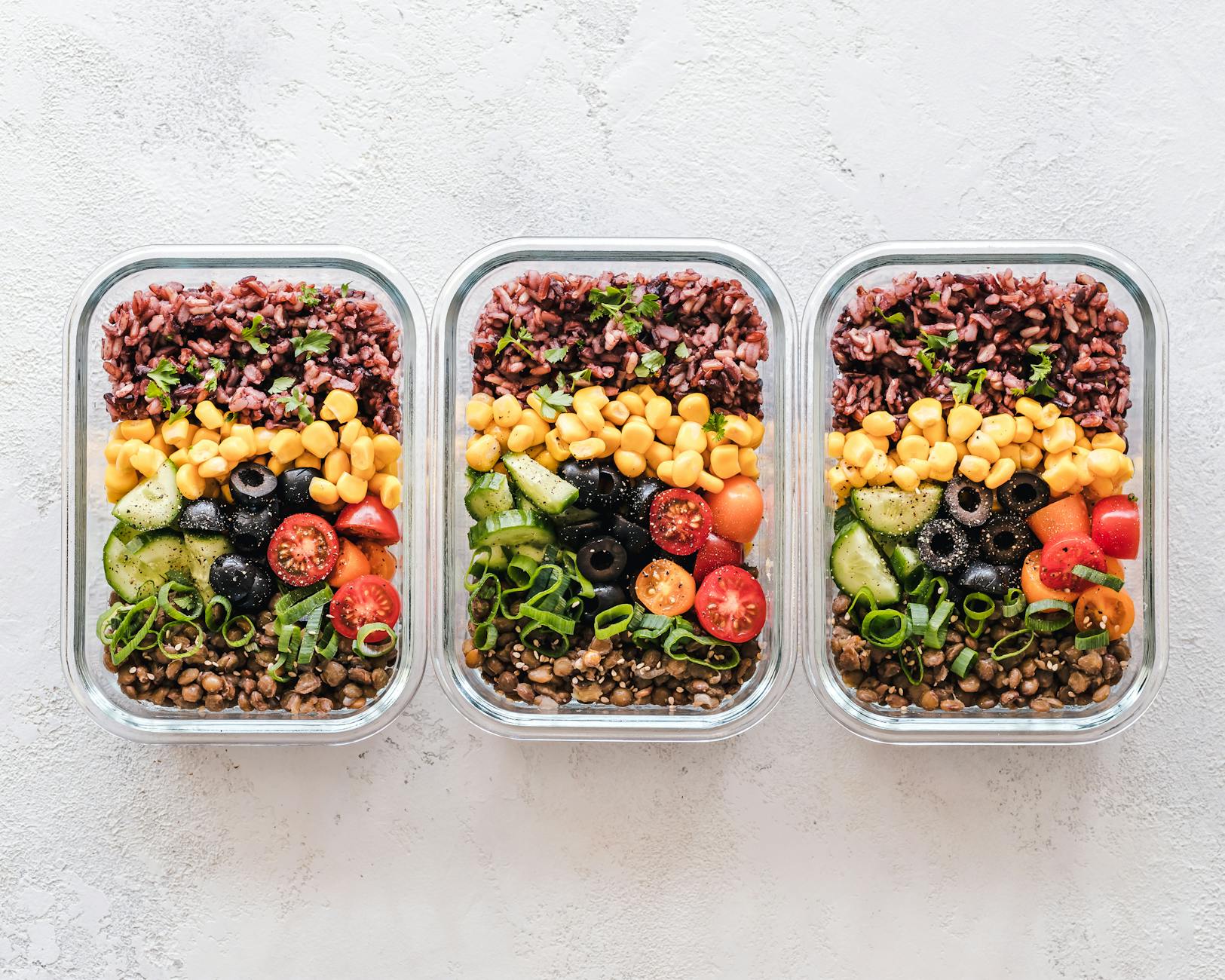
This is the decision that shapes everything else. Neither material is better across the board. They are better at different jobs.
| Glass | Plastic (BPA-free) | |
|---|---|---|
| Reheating | Microwave and oven safe (borosilicate), lid off | Microwave safe only if stated; no oven |
| Stains and smells | Does not stain or hold odours | Tomato and curry can stain over time |
| Weight | Heavy, noticeable in a bag | Light |
| If dropped | Can chip or break | Survives |
| Lifespan | Years, if not dropped; lids wear first | Shorter; warping ends the seal |
| Best for | Home reheating, freezer-to-oven meals | Work and school lunches, kids, travel |
Stainless steel is the third option. It is light, tough and does not stain, but you cannot microwave it or see what is inside. It suits cold lunches and salads more than reheated meals.
Our view, based on our own prices: only pay for glass if you actually reheat in the container. Our 12-piece glass set works out at about R117 per container. Our 16-piece plastic set works out at about R59. That is double the cost for benefits you only get at the microwave. If your lunch goes onto a plate anyway, plastic does the job.
Meal prep containers with lids: why the lid matters most
The container body rarely fails. The lid does. When people say their meal prep containers with lids "stopped working", they almost always mean the seal gave up.
What a good lid has
- A removable silicone gasket. It creates the seal, and taking it out is the only way to clean the groove underneath properly.
- Four locking clips. Clips on every side press the gasket down evenly. Two clips leave gaps at the corners.
- A rigid lid frame. Thin, flexible lids bend under the clips. Our 16-piece set uses impact-resistant ABS lids for this reason.
What kills a lid
Heat is the main enemy. Microwaving with the lid clipped shut traps steam, which bends the lid frame. Once it bends, it never sits flat again. The dishwasher's bottom rack does the same thing slowly. Wash lids by hand or on the top rack, and always open the lid before reheating.
What airtight meal prep containers do, and what they do not
Airtight meal prep containers do three useful things. They stop food drying out, so rice and roast vegetables still taste like food on day three. They stop smells travelling, so your fruit does not taste of last night's curry. And they stop leaks, which is the whole point in a lunch bag.
What they do not do is make food safe for longer. Bacteria grow in cooked food whether air can reach it or not. An airtight seal does not change the 3 to 4 day fridge limit that USDA food safety guidance sets for cooked leftovers.
You can check any container in 30 seconds. Fill it halfway with water, clip the lid on and hold it upside down over the sink, then shake it. If water escapes, the seal is gone. Use that container for dry snacks and keep liquids in one that passes.
Which sizes to buy for which meals
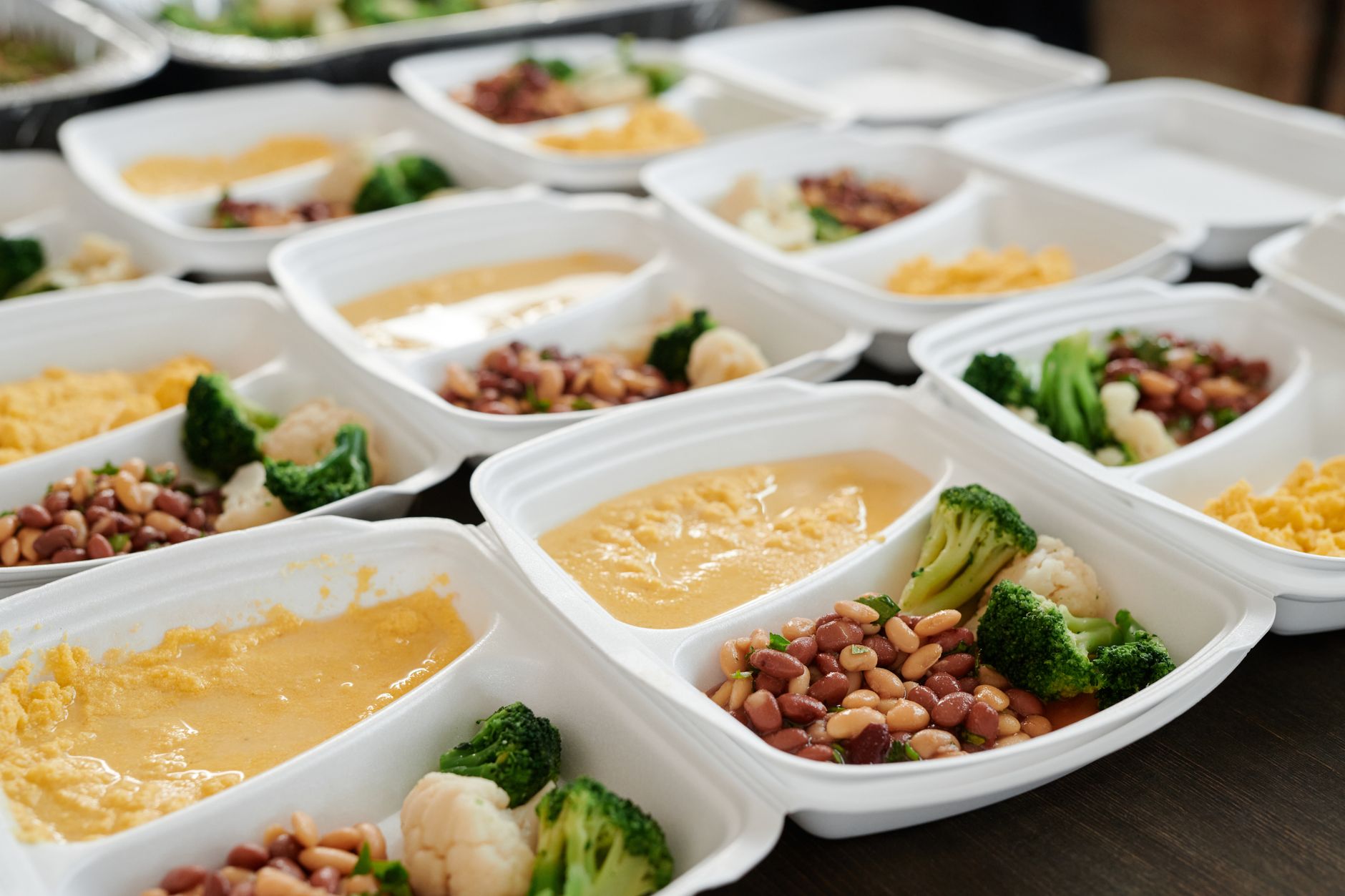
Buying the wrong size wastes more money than buying the wrong material. Too big and food dries out in the empty space. Too small and you squash it or split meals across two boxes. Here is how the sizes in our plastic sets map to real meals.
| Capacity | Use it for |
|---|---|
| 355ml | Sauces, dressings, nuts, chopped fruit, a side of veg |
| 562ml | Overnight oats, yoghurt and granola, a side salad |
| 708ml | A standard lunch: protein, starch and vegetables |
| 828ml | A bigger lunch or a dinner portion with rice or pap |
| 1000ml | Soups, stews, curries, and batch portions for the freezer |
One rule for hot food: do not fill any container deeper than about 7.5cm. USDA guidance is to cool leftovers in shallow containers so they chill quickly. A deep, full 1000ml tub of stew stays warm in the middle for a long time.
How many containers you actually need
Count your meals, not your ambitions. Work out how many meals you prep in one session, then add two or three spares for sauces, snacks and leftovers.
- Five work lunches: 7 to 8 containers.
- Five lunches and five dinners: 12 to 16 containers.
- Family batch cooking for the freezer: 16 or more, weighted towards the 828ml and 1000ml sizes.
Because food only lasts 3 to 4 days in the fridge, most people who prep for a full week do two sessions or freeze the second half. Plan your container count around what sits in the fridge at one time, not the whole week.
Meal prep is mostly a deal between Sunday you and Wednesday you. Sunday does the cooking. Wednesday gets the credit.
How long meal prep lasts, including during load-shedding

These are the USDA food safety numbers for cooked food. They apply no matter how good the container is.
- Get it into the fridge within 2 hours of cooking. Let it steam off for a few minutes first, then refrigerate. Sealing very hot food traps condensation, which makes food soggy and helps warp plastic lids.
- Eat it within 3 to 4 days from the fridge.
- Freeze it for up to 3 to 4 months for the best quality. Leave a little space at the top of soups and stews, because liquids expand as they freeze.
Load-shedding and power cuts
A closed fridge keeps food safe for about 4 hours without power. A full freezer holds for about 48 hours, and a half-full one for about 24, as long as the door stays shut. Two practical habits help. Keep the fridge door closed during a cut, so plan your meal before it starts. And keep your freezer reasonably full, because frozen meal prep containers act as ice blocks for each other.
If the power has been off for longer than 4 hours and your prepped meals were in the fridge, throw them out. Do not taste them to check.
Microwave, freezer and dishwasher rules
Every container has limits, and they are usually different for the body and the lid. Here is how that works for each type we sell.
Plastic meal prep containers
Our plastic lunch box sets are BPA-free and safe in the microwave, freezer, fridge and dishwasher. Take the lid off before microwaving. Wash lids on the top rack or by hand to keep them flat.
Clear Tritan containers
Our crystal-clear sets are made from BPA-free Tritan, which makes the contents easy to see at a glance. They are dishwasher safe, but wash the lids by hand. We do not list them as microwave safe, so reheat your food on a plate or in a glass dish.
Glass meal prep containers
Our glass sets use borosilicate glass, which handles temperature changes better than ordinary glass. The glass is microwave and oven safe and dishwasher safe. The lids are not oven safe, so always take them off first. Even with borosilicate, move frozen meals to the fridge to thaw before they go in a hot oven.
Stains and smells
Tomato sauces and turmeric-heavy curries stain plastic. A quick rinse straight after eating stops most of it. For a stain that has already set, leave the container in the sun for an afternoon. For smells, a paste of bicarbonate of soda and water left overnight usually clears them.
Which Melzware set fits how you prep
These are the sets we would point you to, based on how you prep.
- Five lunches a week, carried to work: the 7 Piece Airtight Plastic Meal Prep Containers (R499). Two 1000ml, two 828ml, and one each of 708ml, 562ml and 355ml.
- Lunches and dinners, or a family: the 16 Piece Airtight Plastic Meal Prep Containers (R939). Two 1000ml, four 828ml, two 708ml, four 562ml and four 355ml, all with snap-lock silicone-sealed lids.
- You reheat at home and want containers that last years: the 12 Piece Glass Food Storage Containers (R1,399), borosilicate glass with locking lids.
You can see all our options in the lunch box containers collection and the glass containers collection.
When you should not buy new containers
We sell containers, and there are still times we would tell you not to buy them.
- Your current ones pass the water test. If the seals hold and the lids sit flat, keep using them. Replace only the ones that leak.
- You want built-in compartments. Our sets are single-compartment. If you need divided trays for portion control, ours are not the right fit. Pair a main container with a 355ml side instead, or buy a dedicated bento box.
- You only pack a sandwich. One lunch box does that. A full set will sit in the cupboard.
- You have not started meal prepping yet. Do two weeks with what you already own. You will learn which sizes you actually use before you spend money.
- You want oven-to-table with the lid on. No plastic lid is oven safe, including ours. Use a covered casserole dish instead.
Frequently asked questions
Are glass or plastic meal prep containers better?
Glass is better if you reheat in the container, because it does not stain, hold smells or warp. Plastic is better if you carry your meals, because it is lighter and will not break if dropped. Many people use glass at home and plastic for the lunch bag.
How long does meal prep last in airtight containers?
Cooked food keeps for 3 to 4 days in the fridge and 3 to 4 months in the freezer, according to USDA guidance. An airtight container keeps food from drying out and absorbing fridge smells, but it does not make food safe for longer than that.
What size meal prep containers should I buy?
For a standard lunch, 700ml to 830ml fits a protein, a starch and vegetables. Use around 1000ml for soups, stews and larger dinners, and 350ml to 560ml for snacks, sauces, oats and sides.
Can you put meal prep containers in the microwave?
Only if the container is marked microwave safe. Always open or remove the lid first so steam can escape. Trapped steam is the most common reason plastic lids warp and stop sealing.
How many meal prep containers do I need?
One container per prepped meal, plus two or three spares for sauces and leftovers. If you prep five lunches a week, 7 to 8 containers is enough. If you prep lunches and dinners, plan for 12 to 16.
How do I test if a container is really airtight?
Fill it halfway with water, close the lid and hold it upside down over the sink for 30 seconds, then give it a shake. If any water escapes, the seal is worn or the lid has warped, and it should not be used for soups or sauces.
Related at Melzware
- Lunch Box Containers: plastic meal prep sets
- Glass Containers: borosilicate food storage
- Clear Food Storage Containers: airtight pantry and fridge storage