

By Melzware — 5 October 2026 · 10 min read
The best kitchen storage containers for a pantry are square, airtight, clear and sized to the packs you actually buy. Square containers sit flush on a shelf. An airtight seal keeps flour, rice and cereal dry and keeps weevils out. Clear sides show you what is running low without opening anything. Get those four things right and the rest of your kitchen organisation gets much easier.
Shop Pantry Storage Containers at Melzware
What to look for in kitchen storage containers

Most pantry containers look the same in a photo. These five details decide whether they still work in a year's time.
An airtight seal
Look for a silicone gasket in the lid and a lock that presses or clips shut. Airtight dry food storage containers keep humidity out, which is what turns biscuits soft and makes sugar set into a block. In coastal cities like Durban and Cape Town, that matters even more. A seal also stops weevils and ants, which a folded-over paper bag never will.
A square or rectangular shape
Here's our strong view: buy square containers, every time. Round jars leave empty gaps between them and against the back of the shelf. Square and rectangular containers sit flush, and you get roughly a quarter more food onto the same shelf. Round jars look good on an open shelf. Inside a cupboard, they waste space you paid for.
Clear sides
If you can see the rice level from the kitchen door, you stop buying a third bag of rice because you thought you were out. Clear, BPA-free plastic also shows you weevils early, before they spread to the next container.
Stackable lids
Flat lids let you stack two or three containers of the same footprint. That is how you use the height of a pantry shelf, which is usually the space most kitchens waste.
A mix of sizes
A set of eight identical containers rarely fits a real pantry. You need a few large ones for flour, maize meal and cereal, several medium ones for sugar, rice and pasta, and small ones for lentils, seeds and baking extras.
What size pantry storage containers you need
Most container guides give sizes in cups and quarts for American pack sizes. Here's a rough guide for South African supermarket packs instead. Densities vary by brand, so leave a little room at the top.
| What you're storing | Typical pack | Container size |
|---|---|---|
| Cake flour or bread flour | 2.5 kg | 4 to 4.5 litres |
| White or brown sugar | 2 kg | 2.5 to 2.8 litres |
| Rice | 2 kg | 2.5 to 2.8 litres |
| Short pasta (penne, fusilli) | 500 g | About 2 litres |
| Cereal flakes | 500 to 750 g | 4 to 6.3 litres |
| Oats or muesli | 1 kg | 2.8 to 4 litres |
| Lentils, beans, seeds, nuts | 500 g | 0.8 to 1.4 litres |
Cereal is the one people get wrong. Flakes take up far more room than their weight suggests, so a box of corn flakes needs a bigger container than a 2 kg bag of sugar. Spaghetti is the other one: it's about 25 cm long, so check a container's internal height before you buy it for long pasta.
Melzware pantry storage containers: which set for which job

All the sets below are airtight, BPA-free and stackable. Prices are correct at the time of writing.
1. 14 Piece Airtight Pasta Storage Container (R899)
The best starting point for most kitchens. You get two 2.8 litre containers, four 2 litre, four 1.4 litre and four 0.8 litre. That covers sugar and rice in the tall ones, pasta in the medium ones, and lentils, seeds and baking extras in the small ones. Despite the name, it's a full pantry set, not just a pasta set. See the 14 Piece set.
2. 24 Piece Airtight Pasta Storage Container Set (R1,499)
Six of each size: 2.8, 2, 1.4 and 0.8 litres. Buy this one if you have a walk-in pantry or a large family, or if you buy in bulk once a month. For a single cupboard, it's more containers than you'll fill.
3. 4 Piece Large Airtight Food Storage Container Set (R549)
Two 4.3 litre and two 2.5 litre containers with a lid that locks on all four sides. This is the set for flour and maize meal, which the pasta sets are too small for. The containers are dishwasher safe, but wash the lids by hand. See the 4 Piece Large set.
4. Airtight Cereal Containers (R549)
Two 6.3 litre and two 4 litre containers with a flip-top pouring lid. They are big enough for a full box of cereal, and children can pour without lifting the whole lid off. They also work for dog biscuits, rice in bulk and snacks. See the cereal containers.
5. 4 Piece Airtight Pasta Storage Container (R499)
Four 2.8 litre containers. A good way to start small with the four staples you use most, usually sugar, rice, pasta and oats.
6. 14 and 20 Piece Clear Airtight Pasta Storage Container Sets (R1,499 and R1,799)
The same idea in extra-clear plastic, for open shelves or a pantry where looks matter as much as storage. They're shatterproof and stackable. See the full pantry container range.
Glass vs plastic for pantry storage
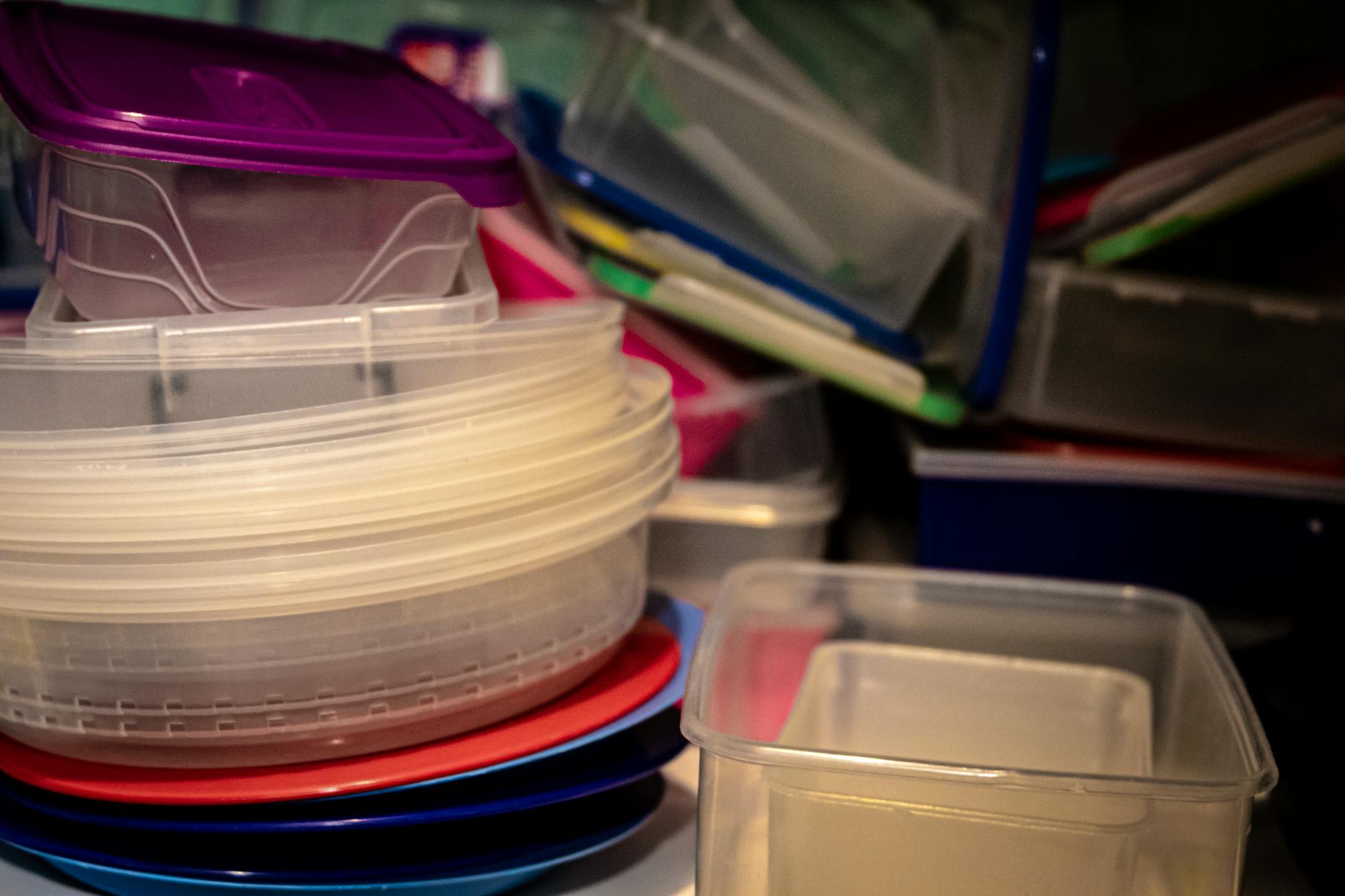
Both work. They suit different parts of the kitchen.
| BPA-free plastic | Glass | |
|---|---|---|
| Weight | Light, easy to lift from a high shelf | Heavy once full |
| If dropped | Shatterproof | Can break |
| Shape | Usually square and stackable | Often round jars |
| Heat | Not for the oven | Microwave and oven safe (borosilicate) |
| Best for | Dry goods in the pantry | Leftovers and meal prep in the fridge |
For dry goods, plastic wins on almost every count that matters in a cupboard. Glass comes into its own in the fridge, where you want to reheat food in the same container. Our glass containers are built for that job. On safety, the US Food and Drug Administration has reviewed BPA in food-contact materials, and every Melzware plastic container is BPA-free in any case.
Kitchen organisation: how to set up your pantry in an afternoon

Most pantry organisation ideas online start with buying baskets. Start with what you already have instead.
- Empty everything. Take every item out of the cupboard. You'll find the half-open bag of rice held shut with a clothes peg, and you'll find two more behind it.
- Throw out and combine. Bin anything expired, stale or with signs of weevils. Combine duplicate packs of the same thing.
- Clean the shelves. Vacuum the corners and wipe the shelves down. Crumbs in the cracks are where pantry pests live.
- Measure before you buy. Measure each shelf's depth and the height between shelves. Bring the numbers with you when you choose containers, so the tall ones actually fit.
- Decant the staples. Wash and dry the new containers fully, then fill them with the bulky everyday items: flour, sugar, rice, pasta, cereal and oats.
- Label everything. Write the contents and the expiry date from the original pack on a label. Cake flour and bread flour look identical in a container.
- Group by use. Make zones: baking, breakfast, dinner staples, snacks and tins. Everything for one job lives together.
- Put the everyday items at eye level. Keep heavy, bulky stock on the bottom shelf and the things you rarely use on the top shelf.
- Use the full height. Stack containers of the same footprint, and add a shelf riser for tins so you can see the back row.
Once it's set up, one habit keeps it working: when you unpack the shopping, refill the container that's running low and put the new stock behind the old.
Keeping weevils, moths and ants out
Most kitchen storage guides skip this, but it's often the reason South Africans buy containers in the first place. Weevils and pantry moths usually arrive in the food itself, in flour, rice, maize meal and dried beans, and paper packaging doesn't stop them spreading. In summer, ants find any open pack of sugar within a day.
- Decant on the day you shop. The sooner flour and grains are in airtight containers, the less chance any insects have to spread to other food.
- Freeze new stock if you've had weevils before. The University of Kentucky entomology department recommends 4 days at -18°C (0°F) to kill eggs in infested food. Let the bag come back to room temperature before you open it, so condensation doesn't make the flour damp.
- Never top up. Finish a container, wash it, dry it and then refill it. Pouring new rice on top of old rice moves any eggs into the fresh batch.
- Check the seals. Silicone gaskets lift out for washing. Make sure they sit flat in the groove before you close the lid.
When not to buy storage containers
Containers help with a lot of pantry problems, but not all of them. Skip them, or buy fewer, if any of these apply:
- You buy small packs and finish them within two weeks. If nothing sits long enough to go stale, the original packaging is fine.
- It's tins, jars, sauces or sealed sachets. These are already sealed. Decanting them adds work and nothing else.
- It's fresh produce. Potatoes, onions and garlic need air. An airtight container makes them sprout and rot faster. Use a basket in a cool, dark spot.
- You want glass jars for the pantry. Our pantry range is BPA-free plastic. We don't sell glass canisters or spice jars, so look elsewhere if that's the look you want.
- Your shelves are shallower than the containers. Measure first. A container that sticks out past the shelf edge gets knocked off.
If none of those apply, the 14 Piece set plus the 4 Piece Large set covers a typical family pantry from flour to lentils. Browse all our clear food storage containers as well.
Frequently Asked Questions
Do pantry storage containers need to be airtight?
For flour, sugar, rice, cereal, pasta and anything else you keep for more than a few weeks, yes. An airtight seal keeps out humidity, which makes food stale or clumpy, and stops weevils and ants getting in. For tins, sealed packets and food you finish within two weeks, it makes little difference.
What size container do I need for a 2.5 kg bag of flour?
About 4 to 4.5 litres. A 4.3 litre container just about holds a 2.5 kg bag of cake flour if you tap it down as you pour. A 2 kg bag of sugar or rice fits in a 2.8 litre container.
Are glass or plastic kitchen storage containers better for a pantry?
For dry goods on a pantry shelf, BPA-free plastic is usually the better choice. It is lighter, will not shatter if it falls from a high shelf, and costs less per litre. Glass is better for leftovers in the fridge because it reheats in the microwave and oven and does not stain.
How do I stop weevils getting into my flour and rice?
Move flour, rice and grains out of their paper bags and into airtight containers as soon as you get home. If you have had weevils before, freeze new bags at minus 18 degrees Celsius for four days first to kill any eggs. Clean the shelves before you put the containers back.
How often should I wash pantry containers?
Wash and dry each container fully before you refill it, rather than topping up old food with new. Never pour new flour or rice on top of the last bit of the old batch, because any eggs or stale food at the bottom spread into the fresh supply.
Should I take everything out of its packaging?
No. Decant the bulky staples you use every week, such as flour, sugar, rice, pasta and cereal. Leave tins, sauces, sealed sachets, tea bags and anything you only use once in a while in their original packaging.
Related at Melzware
- Shop pantry and pasta storage containers
- Shop cereal containers
- Shop clear food storage containers
- Shop glass food containers