

By Melzware Team — 2 October 2026 · 10 min read
The best airtight lunch box containers lock shut over a silicone seal and come in two or three sizes, so a main, a side and a snack each get their own box. Choose glass if you reheat lunch in a microwave and don't carry it far. Choose plastic if you commute on foot or by taxi and want something light that won't break. Either way, carry them in an insulated bag if lunch is more than two hours away.
Shop Lunch Box Containers at Melzware
The best airtight lunch box containers: our picks

These are the Melzware sets that work best for adult lunches, from our lunch box containers range. Prices are correct at the time of writing. All of them are BPA-free and airtight.
1. 4 Piece Glass Food Containers with Bamboo Lids (R799)
The best pick for a desk lunch you reheat. The borosilicate glass base goes in the microwave and the oven, and it doesn't stain from curries or tomato sauces. The bamboo lid looks good on a desk and seals with a silicone gasket.
Take the bamboo lid off before heating, and hand wash it rather than leaving it to soak. Four containers covers a main and a side for two days, or four days of single-container lunches.
2. 12 Piece Glass Food Storage Containers (R1,399)
The best glass lunch containers for adults who meal prep on Sundays. The easy-lock lids press shut over a silicone seal, which makes them airtight and leak proof in a bag. Twelve pieces means you can prep lunches and still have containers left for leftovers at home.
The glass is microwave and oven safe, so you can bake a portion of lasagne in the container, cool it, and take it to work the next day without moving it to another dish.
3. 7 Piece Airtight Plastic Meal Prep Containers (R499)
The best value set for most people. You get seven containers in five sizes: two 1000ml, two 828ml, one 708ml, one 562ml and one 355ml. That covers a main meal, a side and a snack. They're microwave and freezer safe and stack inside each other when empty.
4. 16 Piece Airtight Plastic Meal Prep Containers (R939)
The same five sizes in bigger numbers: two 1000ml, four 828ml, two 708ml, four 562ml and four 355ml. The snap-lock lids use a silicone seal and are rated for liquids, so soups and stews travel without leaking into your bag. A good choice for a household packing more than one lunch a day.
5. 8 Piece Airtight Plastic Meal Prep Containers (R859)
A middle option between the 7 and 16 piece sets. Microwave and freezer safe, stackable, and designed to carry anything from salads to hot soups.
6. 5 Piece Clear Airtight Containers (R499)
Made from clear, shatterproof Tritan plastic, so you can see what's inside without opening it. These are excellent for salads, fruit, snacks and cold lunches. They're dishwasher safe, but the lids should be washed by hand. The listing doesn't say they're microwave safe, so tip food onto a plate before heating.
How to choose containers for food lunch
Five things decide whether containers for food lunch work for you or end up at the back of a cupboard.
The seal
Look for a silicone gasket and clips that lock on every side. Leak proof lunch containers keep sauce in the container and out of your laptop bag. A plain push-on lid is fine for a sandwich, not for soup.
Microwave and freezer use
If you reheat at work, check the listing says microwave safe. If you batch cook and freeze portions, check it says freezer safe too. Glass handles both, as long as you avoid moving it straight from freezer to a hot oven.
Size
An adult main meal fits in an 800ml to 1000ml container. Sides fit in 550ml to 700ml, and snacks or dressings in about 350ml. Sets with several sizes are more useful than sets of identical boxes.
Weight
Glass weighs noticeably more than plastic. If you carry your lunch a long way, that adds up over a week.
The bag
Containers keep food sealed; a bag keeps it cold. Use an insulated lunch bag with ice packs if your lunch sits for more than two hours before you eat. We don't sell lunch bags, so use one you already have or buy one that fits a 1000ml container lying flat.
Bento box glass lunch containers vs plastic
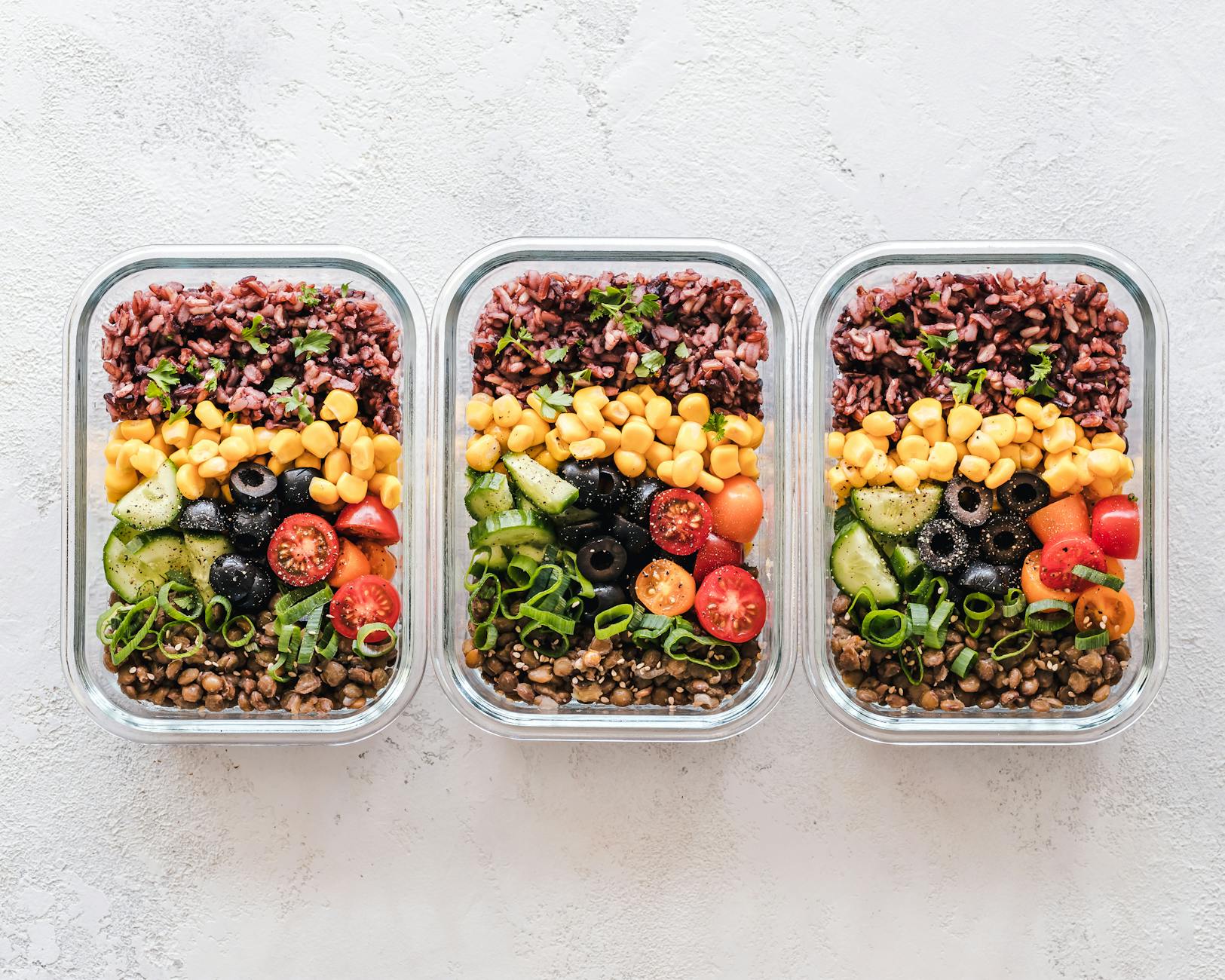
Bento box glass lunch containers and plastic containers both do the job. They suit different days.
| Glass | Plastic | |
|---|---|---|
| Reheating | Microwave and oven safe | Microwave safe if listed; never the oven |
| Stains and smells | Doesn't stain or hold smells | Can stain from curry and tomato over time |
| Weight | Heavier | Light |
| If dropped | Can crack or break | Usually survives |
| Best for | Desk lunches, hot meals, leftovers | Long commutes, site work, snacks |
On safety, both are fine when they're food-grade and BPA-free. The US Food and Drug Administration has reviewed BPA in food-contact materials, and all Melzware plastic containers are BPA-free in any case. The bigger practical difference is heat: glass can go from fridge to microwave to oven, while plastic should only be heated when the listing says it's microwave safe.
Many people end up using both. Glass for the main meal you reheat, plastic for fruit, snacks and anything that travels in a gym bag.
Building a bento-style lunch from separate containers

Here's our view: most adults don't need a divided bento box. Separate containers from 355ml to 1000ml do the same job, and each one can be heated, washed or replaced on its own. With a divided box, the salad gets warm when you heat the rice, and one cracked corner means the whole box goes in the bin.
A simple bento-style setup looks like this:
- Main (828ml to 1000ml): rice and curry, pasta, a grain bowl or last night's leftovers. This is the one that goes in the microwave.
- Side (562ml to 708ml): salad, roast vegetables or a sandwich, kept cold and separate from the hot food.
- Snack (355ml): fruit, nuts, yoghurt, hummus or salad dressing.
Pack wet and dry food separately. Dressing goes in the small container and onto the salad at lunchtime, so the leaves stay crisp. The same goes for crackers and dips.
Batch cooking on a Sunday makes this quick during the week. Cook two mains, portion them into five containers, and freeze two of them. On weekday mornings you only have to add a side and a snack.
Keeping a packed lunch safe until midday

Most lunch box guides skip this, and it's the part that matters most in a South African summer. According to the USDA, bacteria grow fastest between about 4°C and 60°C. Perishable food shouldn't sit at room temperature for more than two hours, or one hour above about 32°C.
If you leave home at 6:30 and eat at 12:30, your lunch has been out for six hours. A sealed container alone won't keep it safe. What does:
- Use two cold sources. The USDA suggests two ice packs or frozen water bottles, one above and one below perishable food.
- Freeze a container the night before. A frozen portion of soup or stew acts as its own ice pack and is defrosted by lunch.
- Get it into the office fridge. Put your containers in the fridge as soon as you arrive.
- Cool hot food before packing. Packing warm food into a sealed container and then into a bag keeps it in the danger zone for longer.
- Reheat until it's steaming hot all the way through, stirring halfway.
If you don't have a fridge or ice packs, pack food that's safe at room temperature: whole fruit, nuts, crackers, peanut butter sandwiches and hard cheese.
Dos and don'ts for taking lunch to work
Bringing lunch from home costs less than buying it and gives you control over what you eat. A few habits make it easier on you and the people you share a kitchen with.
- Do label your containers if you share a fridge. Every office fridge has one unclaimed container that has been there since March, and nobody wants it to be theirs.
- Do rinse containers after lunch, even if you wash them properly at home. Dried-on food is much harder to clean and is what causes lasting smells.
- Don't microwave fish or strong-smelling dishes in a shared kitchen if you can help it.
- Don't fill liquids to the brim. Leave a finger's width of space so the lid seals properly.
- Do check the seal. Silicone gaskets can be removed for washing; make sure they sit flat in the groove before you close the lid.
When our containers aren't the right buy
We'd rather point you elsewhere than sell you the wrong thing.
- You want one box with built-in dividers. We don't sell divided bento boxes. If a single flat box with compartments is what you want, buy one from a specialist.
- You need food kept hot for hours without a microwave. Our containers seal food; they don't insulate it. A vacuum-insulated food flask is the right tool for that.
- You need an insulated lunch bag. We don't stock bags, only the containers that go inside them.
- Your lunch gets thrown around on site or in a backpack. Skip glass and choose one of the plastic sets.
If none of those apply, start with the glass containers for desk lunches, or the 7 Piece plastic set if you want the most sizes for the lowest price.
Frequently Asked Questions
Are glass or plastic lunch containers better for adults?
Glass is better if you reheat lunch in a microwave and mostly drive or sit at a desk. It doesn't stain or hold smells. Plastic is better if you walk, cycle or take a taxi to work, because it weighs far less and won't break if the bag gets dropped.
Can I microwave my lunch in the container?
Only if the container is listed as microwave safe. Melzware's glass containers and the 7, 8 and 16 piece plastic meal prep sets are microwave safe. Take the lid off or open the vent first, and take bamboo lids off completely.
What size container do I need for an adult lunch?
A main meal fits in an 800ml to 1000ml container. Sides and salads fit in around 550ml to 700ml, and snacks, dips and dressings fit in about 350ml. Most adults use one main container and one or two small ones.
How long can a packed lunch stay out of the fridge?
No more than two hours at room temperature, or one hour above about 32 degrees Celsius, according to the USDA. Use an insulated bag with two ice packs if your lunch sits for longer than that before you eat it.
Do I need a bento box with built-in compartments?
No. Two or three separate containers in different sizes do the same job, and each one can be heated, washed or replaced on its own. A divided bento box is mainly useful if you want a single flat box for small portions.
How do I stop my lunch containers from leaking?
Choose containers with a silicone seal and locking clips, check the seal sits flat in its groove before closing, and carry soups and sauces upright. Leave a little space at the top of liquids so the lid doesn't get pushed off as food warms.
Related at Melzware
- Shop lunch box containers
- Shop glass food containers
- Shop clear food storage containers
- 7 Piece Airtight Plastic Meal Prep Containers